Will Robotic Machines Enhance our Lives?
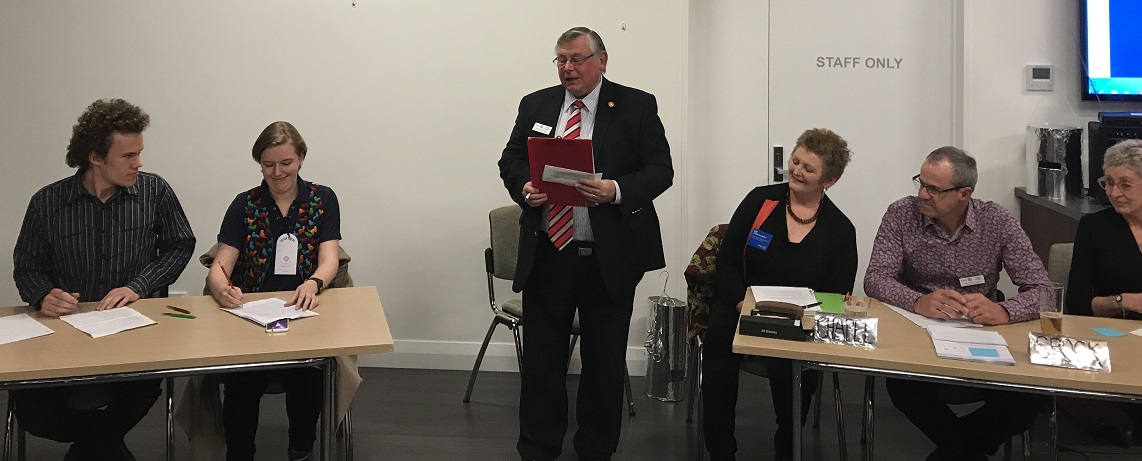
This was the subject of the tightly fought debate at Rotary last week. Our own Liz Courtney, Verdi van Beek and Phillipa McQueen were up against the Rotary Associates – Annabel Ritchie, Shaun Richards and Aidan Bond.
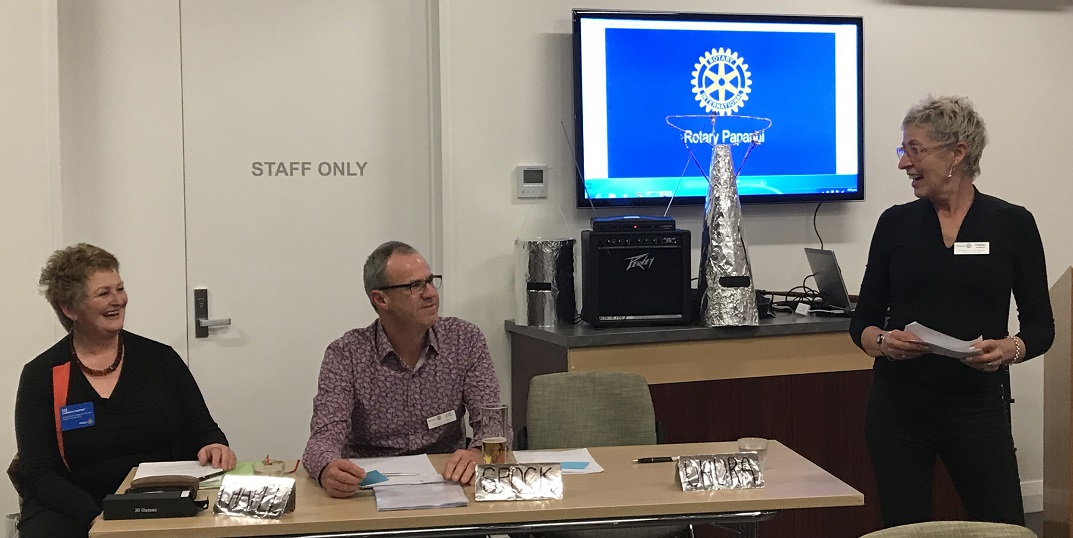
Rotary Papanui team Liz Courtney, Verdi van Beek and Philippa McQueen
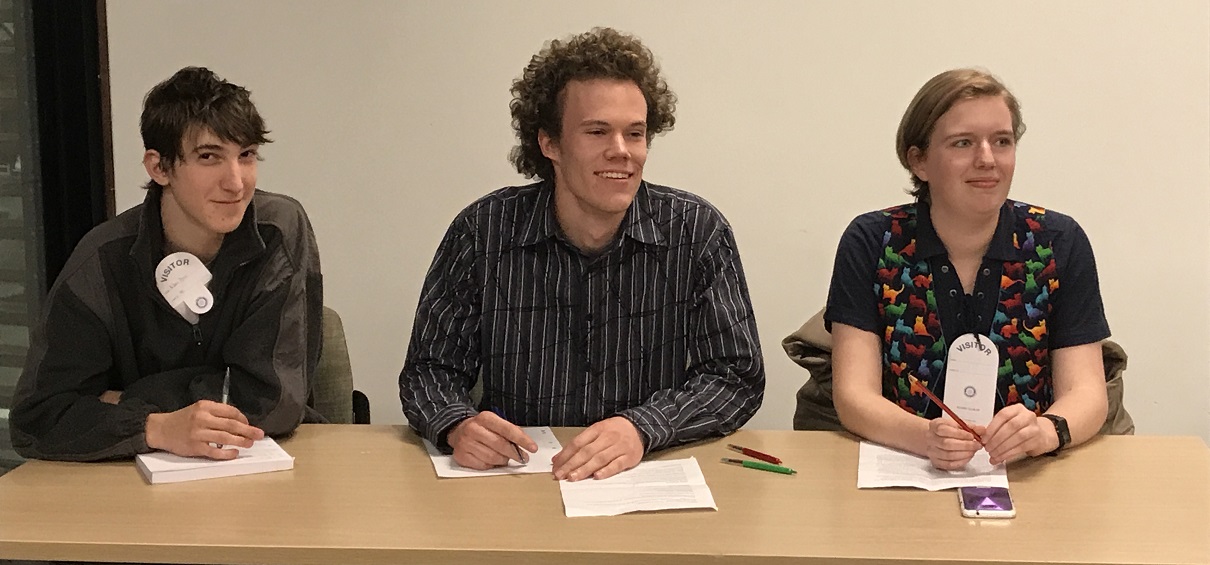
University Students Aidan Bond, Shaun Richards and Annabel Ritchie
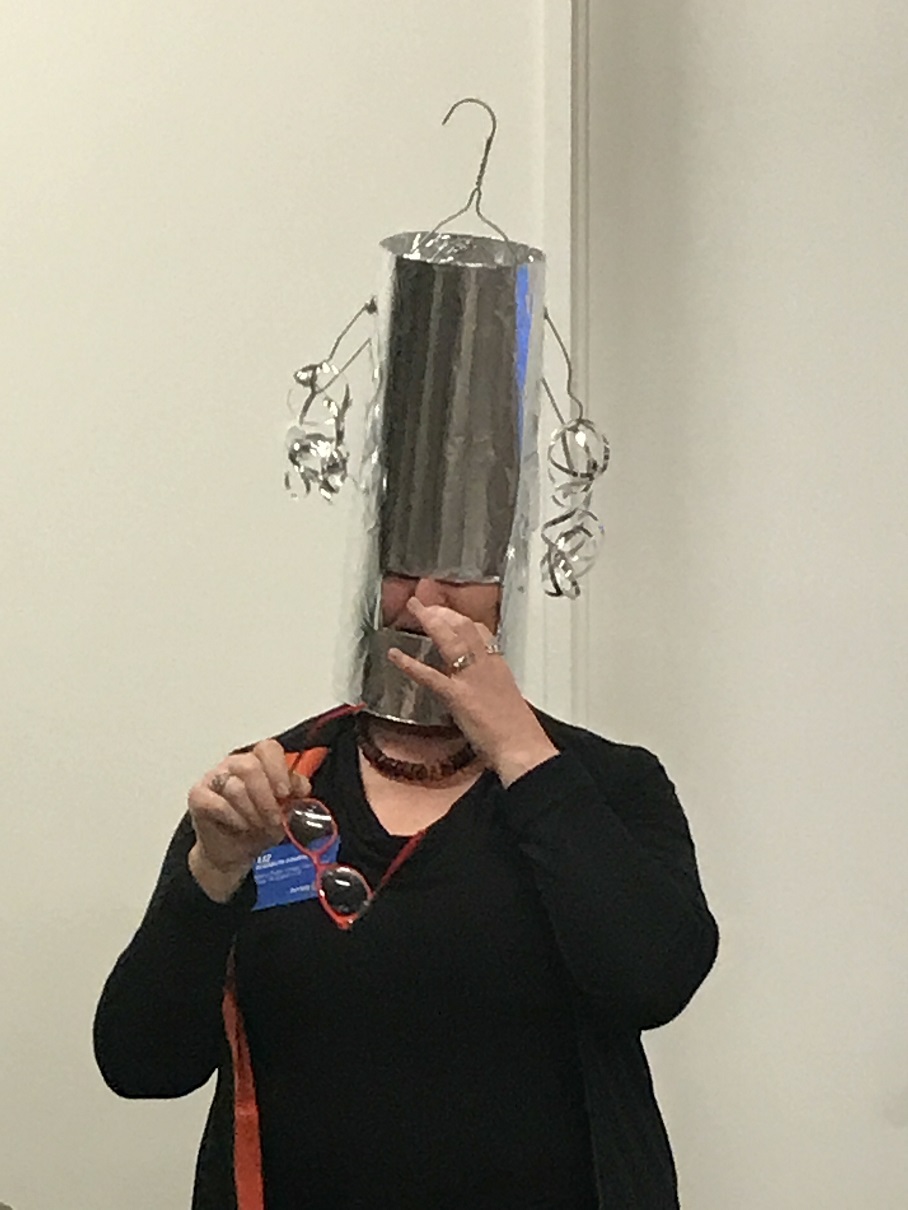
The debate was about to start and for a few minutes the affirmative speakers’ seats were empty. Had they taken fright and disappeared leaving the negative – the Rotary Associates - in command for the evening? Then the doors burst open and three robotic machines danced in. They were our three club members hidden by their robotic masks; the Star Wars command team had arrived.
They were here to tell us what robotic machines do to enhance our lives.
Phillipa opened the case for the affirmative. Of course, robotics help us. ‘Who amongst you fails to use a washing machine, a dish washer or a vacuum cleaner? They are safe and help make our lives easier, freeing up our time to do other, more worthwhile, activities. Machines have been around since the earliest days when we abandoned slaves for labour saving devices.’ As she said in her summing up, Robotic machines give us a freedom we have never had before.
Annabel jumped up to pull down the value of robotic machines. They are a security risk, they can lead to our home being invaded and they reduce the scope of human interaction. Worse this can lead to depression as we come to rely on a virtual reality. Then of course what is the crucial question in all such debates. What happens when the power shuts down?
Verdi extolled the wonders of machines and spoke of how they improve our lives. They are never tired, can work in all temperatures, and are never bored by repetition. There is no need to feed a robotic; there are no sick days and no late arrivals. And rather than destroy jobs, they can develop new ones as we struggle to come to term with our creations. He spoke of the value of self-driving cars which could be a boon for the elderly, blind and disabled. Also, how robotic manufacture had made things like TVs much cheaper. He added there are even robotic pets which require little care and no clean ups.
Shaun Richards sprang to the defence of their argument. Robotics are a threat to our jobs and our livelihoods. He drew a picture of a world where inequality reigned. There would be the wealthy who were the owners of the robotic machines and the working class who were the new poor with no jobs. Many of them would have dropped down from the middle class:- from the world of accountants, civil servants and pen-pushers. He detailed some of the jobs that had disappeared through automatic check-ins and check-outs.
Liz Courtney rose… ‘I’m feeling off today. Can you turn me off? The switch is behind my head… But the robotics world is one we must embrace. It is here to stay and will change our lives probably making us better. It will be a future where we don’t have to toil so hard and where we will have more free time,’ she added.
The last speaker for the negative was Aidan Bond, who turned on a performance. He saw robotics as enriching the top 1% and that it could lead to cyber war. That the mental state of world where robotic machines are king will not be the best for people – that people need the stimulus of work.
Both Number 3 speakers offered some excellent rebuttal.
It was a close fought debate but in the end the adjudicator, Ken Lord, a partner at Parry Fields found for the negative. But we must praise everyone for the time they took to prepare their speeches and for the laughs they provided and the wealth of information they contained. After all who but our beloved members of the affirmative would ever praise robotics for improving our libido…? We’ll want a rematch soon.
From Jenny Haworth